

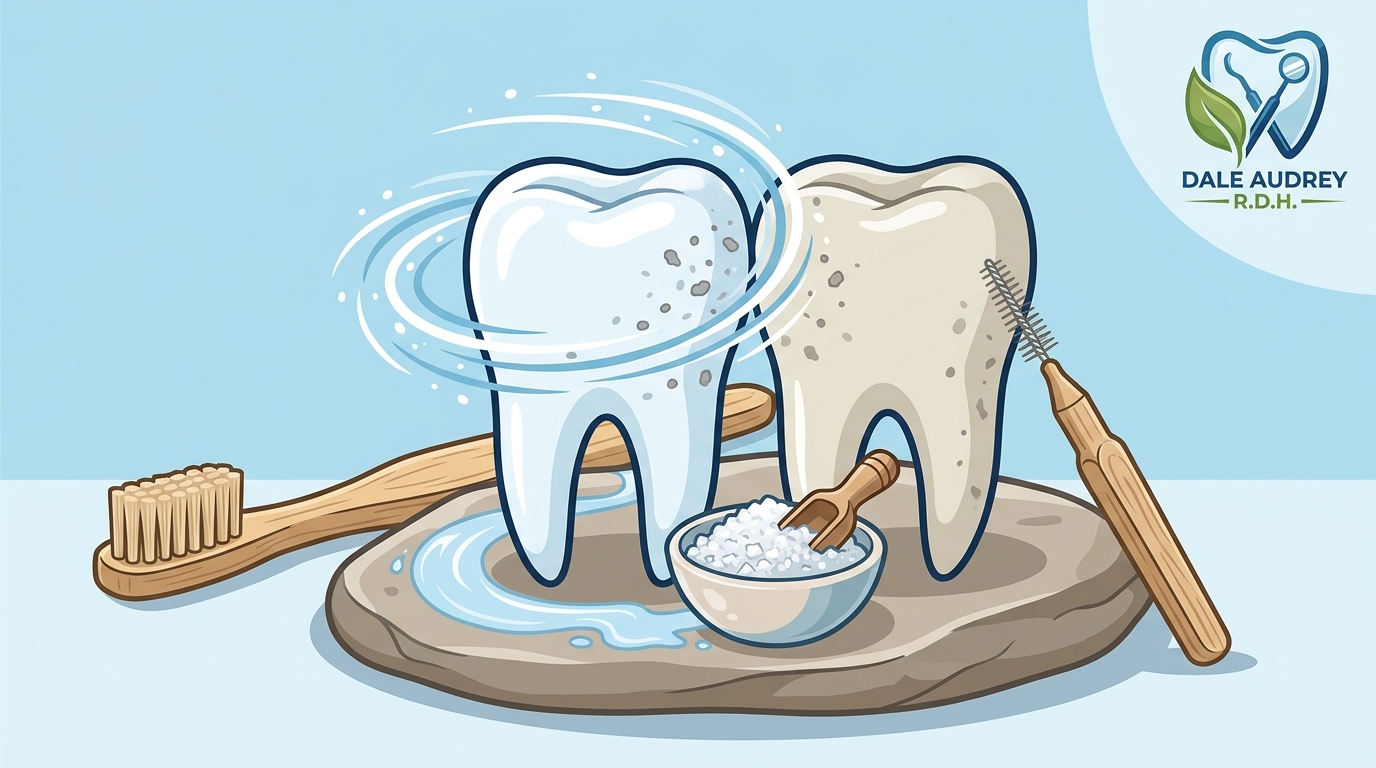
Sea salt does not chemically bleach teeth, but it can help remove surface stains through gentle mechanical action. When used as a rinse or mild abrasive, it supports oral hygiene without the harsh peroxide reactions that often trigger sensitivity. Dale Audrey R.D.H. recommends pairing salt rinses with professional-grade natural tools to maintain enamel integrity while achieving a brighter smile.
The Science of Salt and Enamel
Managing Sensitivity During Use
Tooth sensitivity is a common concern when trying natural whitening methods. Sensitivity often arises when the enamel surface is worn down or when the dentin tubules are exposed. Using a coarse salt directly on teeth can be too abrasive for sensitive individuals. Dale Audrey R.D.H. suggests using a pre-diluted salt rinse or a fine-grain powder to minimize friction. If you experience sharp pain when biting cold food, stop using abrasive methods immediately. This approach ensures that you are cleaning your teeth without compromising the protective enamel layer.
Integrating Salt into a Daily Routine
Sea salt works best as a supportive step in a broader oral care regimen. You can mix a small amount of fine sea salt with water to create a daily rinse. This rinse helps neutralize acids and keeps the mouth clean after meals. For those who prefer a more tactile experience, a fine salt powder can be used with a soft-bristled brush. The key is consistency rather than intensity. Gentle, daily use is far more effective than aggressive, infrequent scrubbing. This routine complements other natural products like the natural mouthwash options available at Dale Audrey R.D.H.
Comparing Salt to Other Natural Methods
When to Consult a Professional
Natural methods are effective for surface stains, but they have limits. If your teeth are discolored due to aging, medication, or internal trauma, salt will not change the color. In these cases, a professional assessment is necessary. Dale Audrey R.D.H. emphasizes the importance of regular dental checkups to ensure that your gums and enamel are healthy before starting any new routine. If you notice bleeding gums or persistent sensitivity, a dental professional can identify the underlying cause. This ensures that your home care routine is safe and effective for your specific oral health needs.
Key Takeaways
- Sea salt does not chemically bleach teeth but helps remove surface stains through gentle abrasion.
- Coarse salt can be too abrasive for sensitive teeth; use fine grains or diluted rinses instead.
- Salt supports oral hygiene by neutralizing acids and maintaining a healthy pH balance.
- Consistency is more important than intensity when using salt for whitening.
- Combine salt rinses with other natural products for a comprehensive oral care routine.
- Consult a dental professional if you have deep discoloration or persistent sensitivity.
Frequently Asked Questions
Does sea salt actually whiten teeth?
Sea salt does not chemically whiten teeth. It helps remove surface stains through physical abrasion, which can make teeth appear brighter over time.
Is salt safe for sensitive teeth?
Yes, if used correctly. Avoid coarse grains and use a fine salt rinse or a very gentle powder to prevent enamel wear and sensitivity.
How often should I use a salt rinse?
You can use a salt rinse once or twice daily. It is a gentle practice that supports overall oral hygiene without the risk of overuse.
Can salt replace toothpaste?
Salt can complement toothpaste but should not replace it entirely. Toothpaste provides fluoride or other essential minerals that help prevent cavities.
What type of salt is best for teeth?
Fine-grain sea salt or Himalayan pink salt is best. These types are less abrasive than coarse rock salt and are easier to rinse away.
Will salt damage my enamel?
When used gently, salt does not damage enamel. However, aggressive scrubbing with coarse salt can wear down enamel over time, leading to sensitivity.
Final Thoughts
Sea salt is a versatile and gentle addition to your oral care routine. It supports a brighter smile by removing surface stains without the harshness of chemical bleaches. By using fine grains and maintaining a consistent routine, you can enjoy the benefits of natural whitening without compromising your enamel. For a complete natural oral care experience, explore the full range of products at Dale Audrey R.D.H. to find the right tools for your unique needs.