
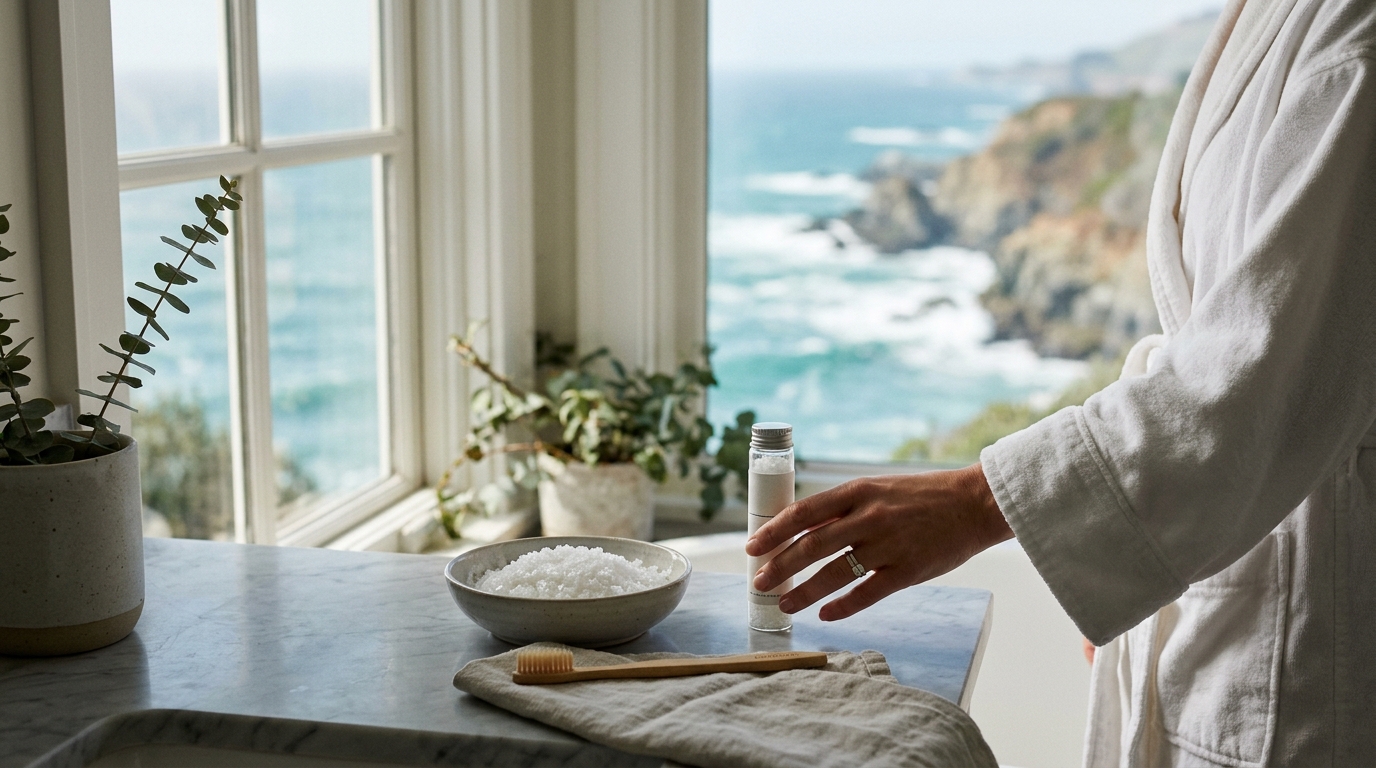
Sea salt is a gentle mineral that can support a brighter smile without the harsh abrasion often found in commercial whitening pastes. For individuals with sensitive teeth, the key is to use low-concentration saline solutions that clean and freshen without causing thermal or chemical irritation. Dale Audrey R.D.H. offers natural oral care solutions designed to maintain enamel health while addressing surface stains.
1. Himalayan Salt Water Rinses
Use a pre-mixed, alcohol-free saline rinse to gently lift surface stains. A salt water rinse is a traditional oral care practice that uses dissolved minerals to cleanse the mouth. The Dale Audrey Himalayan Salt Water Mouth Rinse combines hand-mined pink salt with organic aloe vera and holy basil. This formula is free of alcohol and artificial sweeteners, making it a comfortable choice for those with tender gums or sensitive enamel.
2. Post-Whitening Mineral Soaks
Apply a mineral-rich rinse after using a whitening pen to soothe the enamel. After applying a gentle whitening agent, the teeth may feel temporarily vulnerable. Swishing with a Himalayan salt rinse helps to neutralize the mouth and provide trace minerals like magnesium and calcium. This step supports the natural structure of the tooth while ensuring the whitening process does not lead to dryness or irritation.
3. Salt and Baking Soda Paste
Create a mild abrasive paste using a very small amount of salt and baking soda. A salt and baking soda paste is a common home remedy for removing extrinsic stains from coffee or tea. For sensitive teeth, you must use a minimal amount of salt to avoid scratching the enamel. Mix a tiny pinch of fine salt with a small amount of baking soda and water, then apply it with a soft-bristled brush no more than once a week.
4. Salt-Infused Oil Pulling
Combine a saline rinse with oil pulling to reduce plaque and brighten teeth. Oil pulling is an Ayurvedic practice that involves swishing oil to remove bacteria and debris. Using a salt water rinse after oil pulling helps to remove any remaining oil residue while the minerals in the salt support gum health. This dual approach can make teeth appear cleaner and brighter by reducing the yellowing caused by plaque buildup.
5. Salt Water Gargles for Gum Health
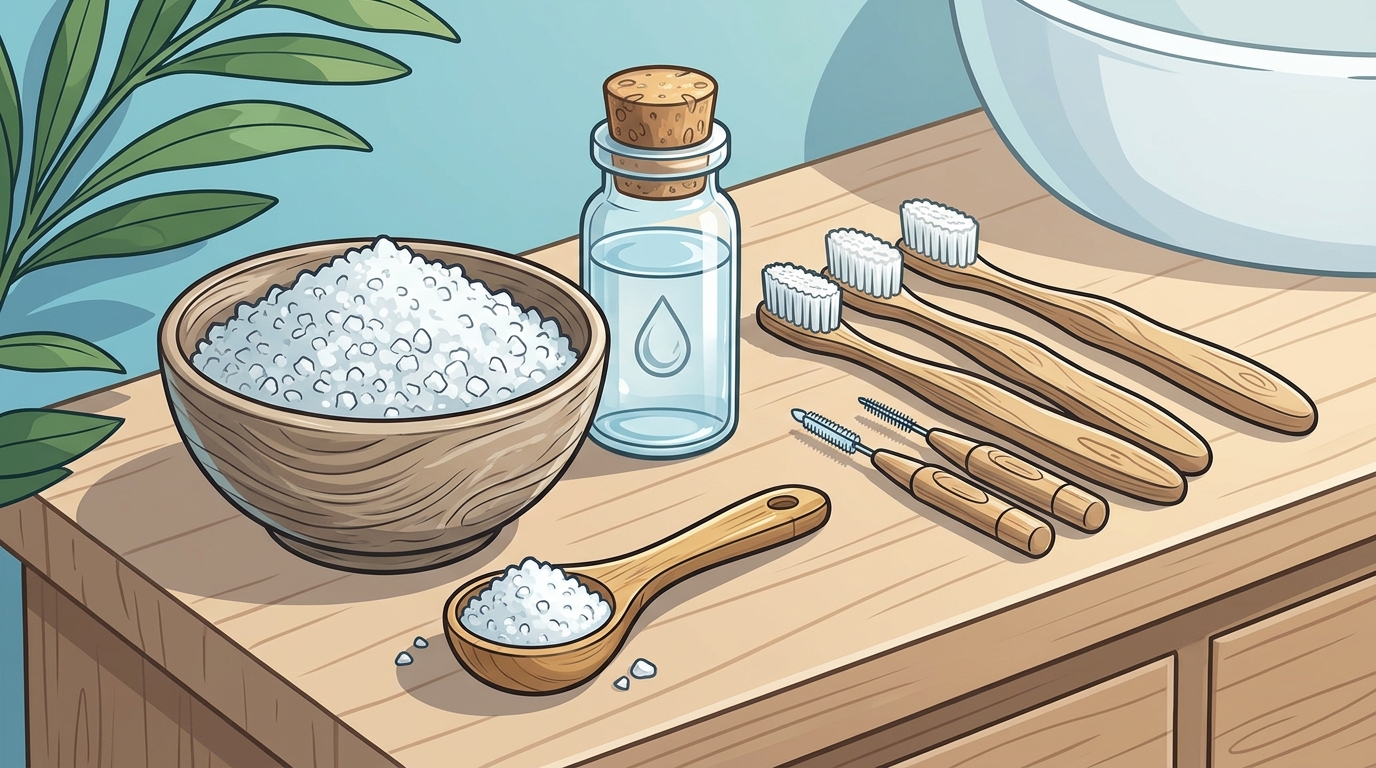
Maintain healthy gums to create a brighter, more even-looking smile. Healthy gums are essential for a bright smile because receding or inflamed gums can make teeth appear longer or discolored. A daily salt water gargle is a simple way to keep the gumline clean and reduce inflammation. By supporting the tissues around the teeth, you ensure that your natural tooth color is displayed in its best light.
Choosing the Right Method
When selecting a sea salt whitening method, prioritize gentleness and consistency over intensity. If you have significant sensitivity, start with a pre-mixed, alcohol-free rinse like the Dale Audrey Himalayan Salt Water Mouth Rinse. Avoid harsh abrasives and always consult your dental professional if you experience persistent pain or discomfort.
Frequently Asked Questions
Is sea salt whitening safe for sensitive teeth?
Yes, when used in a low-concentration saline rinse. Salt water is generally gentle and does not contain the high levels of peroxide or abrasive particles that can trigger sensitivity. Always choose an alcohol-free formula to avoid drying out the mouth.
How often should I use a salt water rinse for whitening?
You can use a salt water rinse once or twice daily as part of your regular oral hygiene routine. For whitening purposes, consistency is more important than frequency. Pairing it with a gentle whitening pen can help maintain results over time.
Does salt water actually whiten teeth?
Salt water primarily cleanses and freshens the mouth by removing surface debris and plaque. While it may not change the intrinsic color of the tooth, it can make teeth appear brighter by removing the yellowing caused by buildup and supporting overall gum health.
Can I use table salt for whitening?
It is better to use fine sea salt or Himalayan salt for oral care. Table salt often contains anti-caking agents that are not intended for ingestion. Fine sea salt dissolves more easily and provides trace minerals that can benefit the oral environment.
What should I avoid if I have sensitive teeth?
Avoid whitening products with high concentrations of peroxide or very coarse abrasives. Also, avoid rinsing with alcohol-based mouthwashes, as they can dry out the mouth and increase the likelihood of sensitivity. Stick to gentle, natural ingredients like those found in Dale Audrey products.
Final Thoughts
Sea salt offers a natural and gentle approach to supporting a brighter smile for those with sensitive teeth. By incorporating a quality salt water rinse into your daily routine, you can maintain clean, healthy teeth without the risk of harsh chemical irritation. Explore the full range of natural oral care products at Dale Audrey R.D.H. to find the right solution for your needs.